454 Hours to go…release the robos!
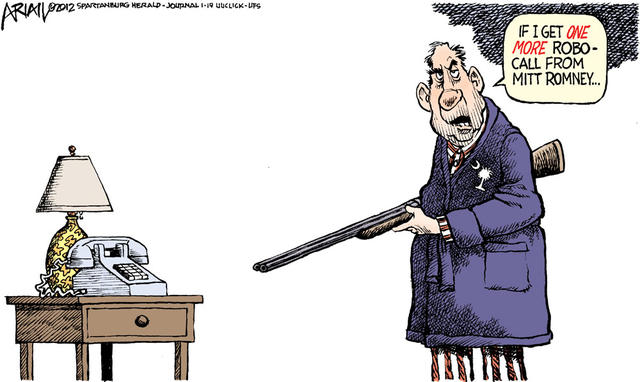
Source: Robert Ariail, Spartanburg Herald Journal
I just checked election day countdown. There’s 18 days and 22 hours left for the polls close in Minnesota. If you’re months deep into managing a campaign, you’ve already transitioned your focus from fundraising to staging for getting out the vote.
For those of us who live outside of the world politics and campaigns, we also notice the increase use of a particular and very unwelcomed interruption: those dreaded robocalls. This tool is one of the markers of a poorly run campaign.
So why do both issue and candidate campaigns use them?
- They’re cheap: After burning through millions of dollars and lawn signs, television ads and other high-priced tools, robo-calls seem like a bargain. At $.03-$.05 per call, campaigns can reach thousands of potential voters for the cost of one midmarket TV spot.
- They’re labor free: Campaign staff spend tremendous amounts of time recruiting volunteers to make phone calls to win over thousands of swing voters. Robocalls can be set up in a matter of just a few hours of staff time.
- They can leverage celebrity endorsements: The social psychology thinking goes something like this, let’s get a well-loved celebrity, like Morgan Freeman, to record the message. Since Mr. Freeman is well known and regarded, people will welcome message from him.
- They’re habit forming: Campaign managers are creatures of habit. The logic goes that robocalls were likely used in prior campaigns where they volunteered, and then staffed, and then ran on their own. The first time someone smokes a cigarette, they are unlikely to get addicted. But after that second third or fourth cancer stick, they’re more likely to become smoker.
Too many campaign managers are addicted to robocalls, and they’ve become a cancer within the industry. So why should they kicked the habit?
- They don’t work: Numerous scientific studies over the last decade have shown that robocalls contribute zero impact when used as a get out the vote (GOTV) tool.
- People screen calls: In the days before caller ID, answering the phone was a crapshoot. Today, unrecognized phone numbers rarely break through a person’s screening.
- They irritate supporters: And if campaigns have to use the recognized number counter call screening, they risk doing little more than irking the people who support them financially and volunteer their time.
- They can be illegal: If a campaign robocalls a mobile phone without prior consent, they could be hit with a $16,000 fine per instance by the FCC.
SMS is a better alternative to robocalls. An effective GOTV campaign will win any close race. Your core supporters are more likely to opt-in text messaging, especially millennial voters, because they’re less intrusive. Here’s a few ways they can use text messaging to get out the vote:
- Offer to send a reminder to vote: While presidential election cycles see greater turnout, a simple reminder on Election Day can have a great impact in primary and midterm races.
- Asking supporters to forward messages: Thankfully, forwarding a robocalls is pretty tough to do. Asking supporter to forward text message to remind their friends about registering to vote, applying for an absence a ballot or simply asked them if they voted is relatively painless. And it also comes from someone they know.
- Asking for help: The people who opt into your mobile list are more likely to be your strongest supporters. So why not ask them to volunteer? Campaigns can send out a quick message about volunteer opportunities on Election Day. It’s likely to be more efficient than having volunteers call other potential volunteers.
In time, text messaging and other mobile tools might find kick the robocall addiction. Until then, the best we can do is to screen our calls. If you’d like to do more to end the scourge of robocalls, check out this great program from the Citizens for Civil Discourse.